Dept. of Civil Engineering GP Berhampur
About Department
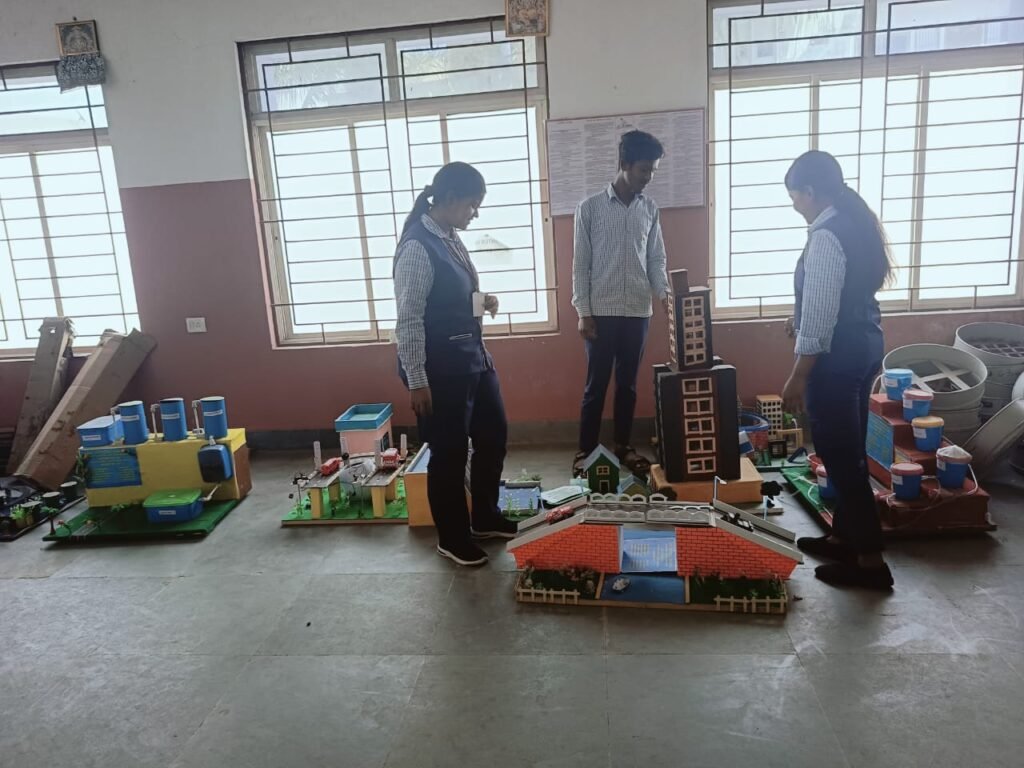
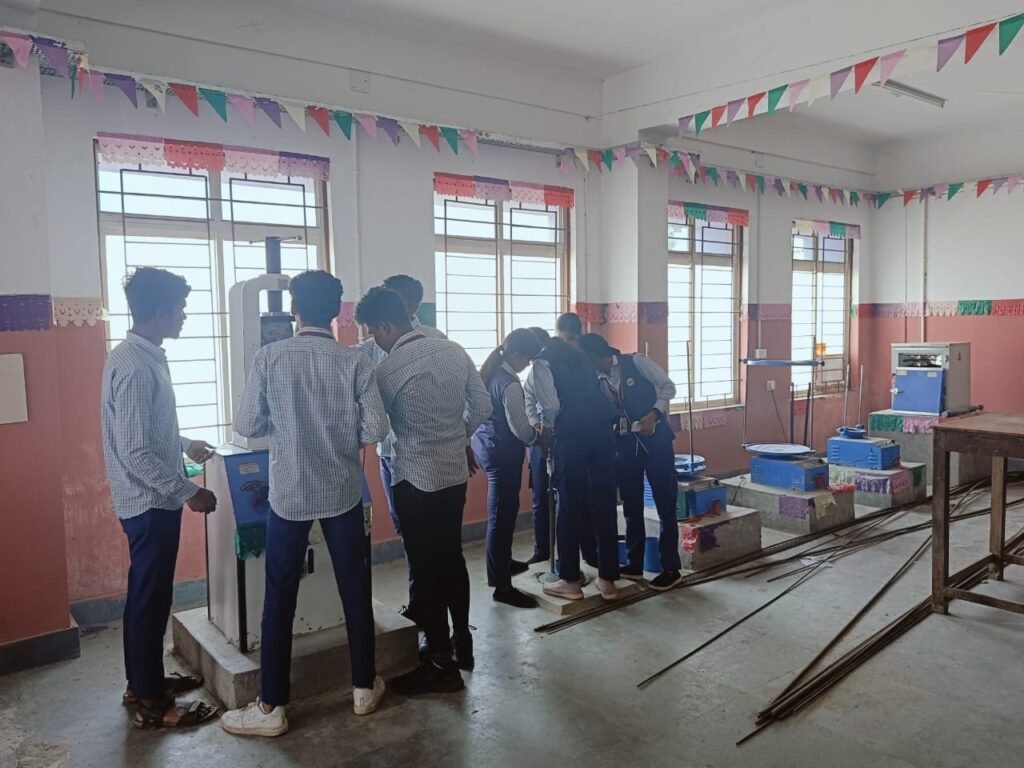
The Civil Engineering Department, established in 2014, plays a crucial role in the growth and development of any nation. Civil engineering expertise is essential for the construction of ntial for the construction of infrastructure such as roads, buildings, railways, airports, dams, drainage and irrigation systems, canals, and water supply networks. The department offers a well-structured curriculum that emphasizes engineering methodologies and practices related to the planning, design, and management of buildings, bridges, hydraulic structures, environmental systems, transportation systems, and more. The program also fosters a professional approach in students through project work and practical training. The department has an intake capacity of 60 students.
Vision & Mission
VISION:
To produce competent and ethically responsible Civil Engineering diploma graduates through quality technical education and skill-based training for the benefit of society.
MISSION:
M1: To impart strong theoretical knowledge and hands-on skills in Civil Engineering using modern tools and industry exposure.
M2: To develop ethical values, professionalism, and effective communication among students.
M3: To encourage innovation, lifelong learning, and entrepreneurial abilities.
Programme Educational Objectives (PEOs):
- • PEO 1: Graduates will apply Civil Engineering knowledge and basic management principles to solve technical problems responsibly and sustainably.
- • PEO 2: Graduates will pursue higher studies, gain employability skills, or take up entrepreneurial and technical roles in Civil Engineering and allied fields.
- • PEO 3:Graduates will demonstrate professional ethics, teamwork, and adaptability in multidisciplinary environments.
PO
Programme Specific Outcomes (PSOs):
- • PEO 1: Students will acquire practical skills in surveying, testing, design basics, and construction practices with knowledge of science and mathematics.
- • PEO 2: Students will understand economic, environmental, and safety aspects of infrastructure projects and use modern tools effectively.
- • PEO 3:Students will engage in self-learning and provide ethical and responsible Civil Engineering services to society.
Time Table
Syllabus
| #Sl. | Title | Action |
|---|---|---|
| 1 | Diploma Curriculum in Civil Engineering – Semester IV (Second Year) | Download |
| 2 | Diploma Curriculum of Civil Engineering – Semester V (Third Year) | Download |
| 3 | Diploma Curriculum of Civil Engineering – Semester VI (Final Year) | Download |
| 4 | Diploma Curriculum of Civil Engineering – Semester III (Second Year) | Download |

Tejaswini Gouda
Lecturer (PTGF) (6 years of Teaching Experience) B.Tech(Civil)

A.Gupteswar Patro
Lecturer (8 years of Teaching Experience) B.Tech(Civil)

SUSHREE SASMITA SAHOO
Teaching experience-12 years (Qualification-M. Tech , add on Civil department)

SIBANI SAHU.
Teaching experience – 1 yrs. ( M. Tech)

S. Sandhya Rani
Lab Assistant, Civil (B. Tech)

NARASINGH MAHANTY
Teaching experience -12 yr (B. Tech)

RUPELI KUMARI PATRO
Teaching Experience -6 And half years ( M. Tech)
Laboratory
PHYSICS LABORATORY:
Physics laboratory plays a vital role in helping students learn and understand physics concepts. Experiments help students visualize and understand complex physics theories. Students see the relevance of physics to everyday life, technology, and engineering
CHEMISTRY LABORATORY:
The experiments conducted in chemistry laboratory help students visualize and understand complex chemistry concepts. Students gain practical experience by conducting experiments, which reinforces theoretical concepts.