Dept. of Civil Engineering GP Berhampur
About Department
The Department of Civil Engineering, established in 2014, plays a vital role in developing skilled technical manpower required for nation-building. Civil engineering is essential for the planning, construction, and maintenance of infrastructure such as roads, buildings, bridges, railways, irrigation systems, drainage works, and water supply networks.
The department offers a three-year diploma program as per the curriculum prescribed by the State Council for Technical Education and Vocational Training Odisha, which focuses on building strong fundamental knowledge along with practical skills. The curriculum covers key areas such as surveying, construction technology, structural engineering, geotechnical engineering, transportation engineering, environmental engineering, and water resources engineering.
Emphasis is given to practical-oriented learning, including laboratory work, field visits, site exposure, and project work, enabling students to develop technical competence and problem-solving abilities required in the construction industry. The department also promotes professional ethics, teamwork, and communication skills to prepare students for employment as junior engineers, supervisors,Diplome Enginner Trainee and technicians.
The department has an approved intake capacity of 60 students and is committed to producing competent diploma engineers to meet the demands of the industry and society.
Vision & Mission
VISION:
To produce competent and ethically responsible Civil Engineering diploma graduates through quality technical education and skill-based training for the benefit of society.
MISSION:
M1: To impart strong theoretical knowledge and hands-on skills in Civil Engineering using modern tools and industry exposure.
M2: To develop ethical values, professionalism, and effective communication among students.
M3: To encourage innovation, lifelong learning, and entrepreneurial abilities.
Programme Educational Objectives (PEOs):
- • PEO 1: Graduates will apply Civil Engineering knowledge and basic management principles to solve technical problems responsibly and sustainably.
- • PEO 2: Graduates will pursue higher studies, gain employability skills, or take up entrepreneurial and technical roles in Civil Engineering and allied fields.
- • PEO 3:Graduates will demonstrate professional ethics, teamwork, and adaptability in multidisciplinary environments.
PO
3. Design/development of solutions:
Design solutions for well-de-fined technical problems and assist with the design of systems components or processes to meet specified needs.
Programme Specific Outcomes (PSOs):
- • PSO 1: Students will acquire practical skills in surveying, testing, design basics, and construction practices with knowledge of science and mathematics.
- • PSO 2: Students will understand economic, environmental, and safety aspects of infrastructure projects and use modern tools effectively.
- • PSO 3:Students will engage in self-learning and provide ethical and responsible Civil Engineering services to society.
Time Table
Syllabus
| #Sl. | Title | Action |
|---|---|---|
| 1 | Diploma Curriculum of Civil Engineering – Semester III (Second Year) | Download |
| 2 | Diploma Curriculum in Civil Engineering – Semester IV (Second Year) | Download |
| 3 | Diploma Curriculum of Civil Engineering – Semester V (Third Year) | Download |
| 4 | Diploma Curriculum of Civil Engineering – Semester VI (Final Year) | Download |

SUSHREE SASMITA SAHOO, H.O.D(I/C)
Teaching Experience: 12 years
Qualification: M.Tech in Civil Engineering

S. SANDHYA RANI
Lab Assistant, Civil (B. Tech)

DEEPANJALI SETHI, (GF)
Experience-5 years, Qualification-M tech in civil Engineering

SIBANI SAHU, (GF)
Teaching Experience: 1 year
Qualification: M.Tech in Civil Engineering

NARASINGH MAHANTY, (GF)
Teaching Experience: 12 years
Qualification: B.Tech in Civil Engineering
Laboratory
1. TRANSPORTATION ENGINEERING LAB
In this laboratory, students conduct various tests on construction materials such as aggregate and bitumen. The experiments include the Flakiness and Elongation Index of aggregates, Angularity number of aggregates, Aggregate impact test, Los Angeles Abrasion test, Aggregate crushing test, Softening point test of bitumen, Penetration test of bitumen, Flash and fire point of bitumen, Ductility test of bitumen.
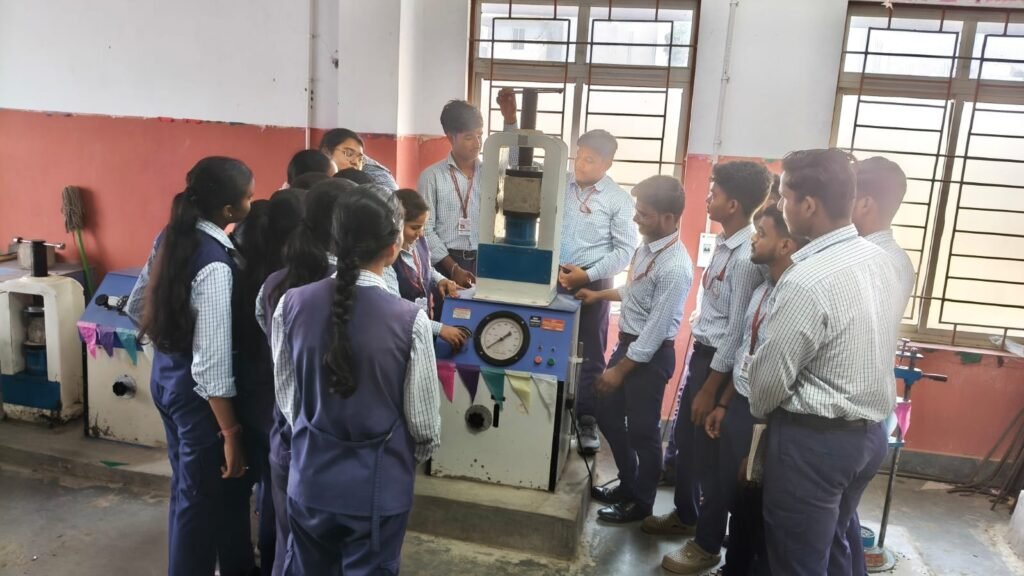
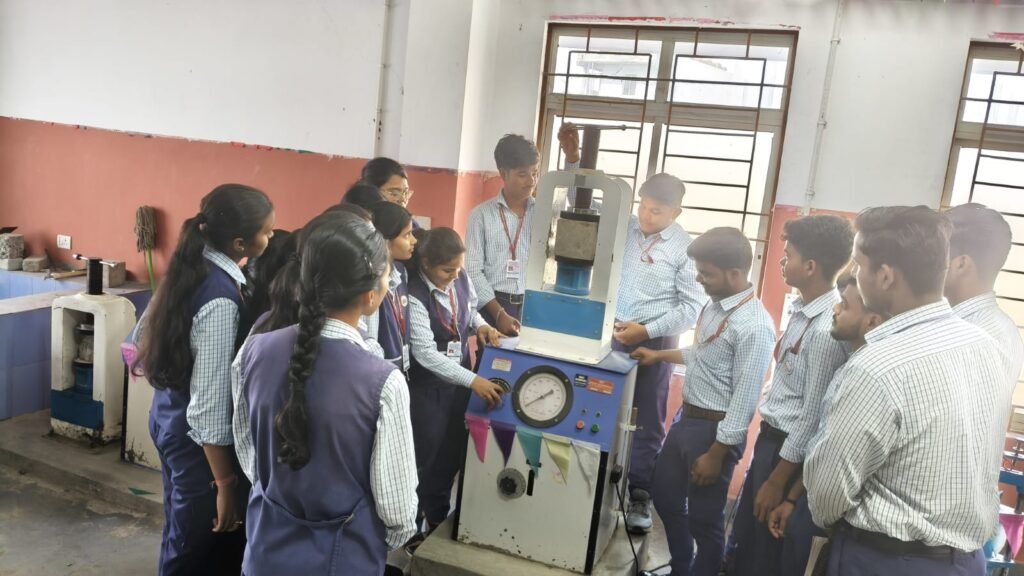
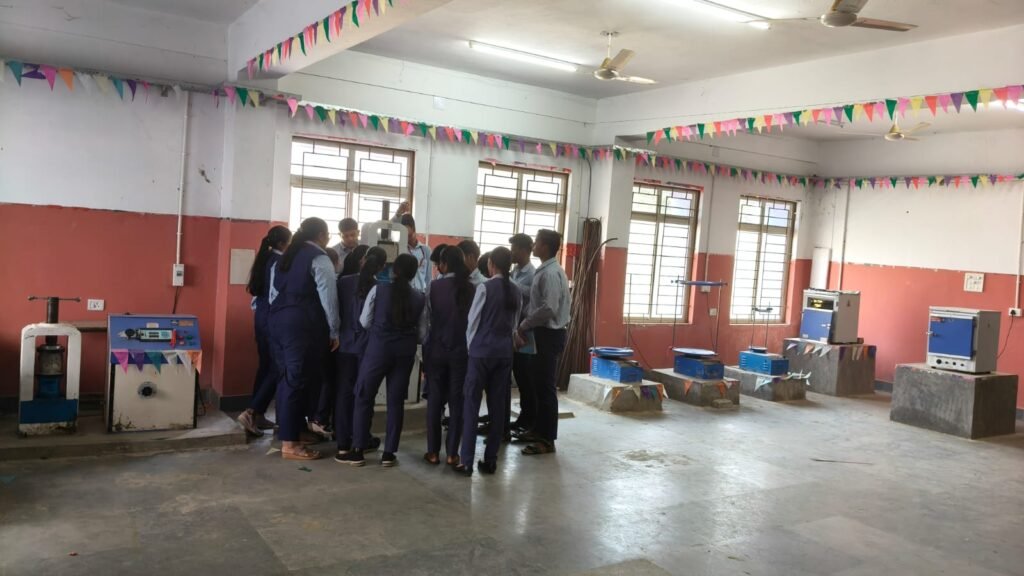
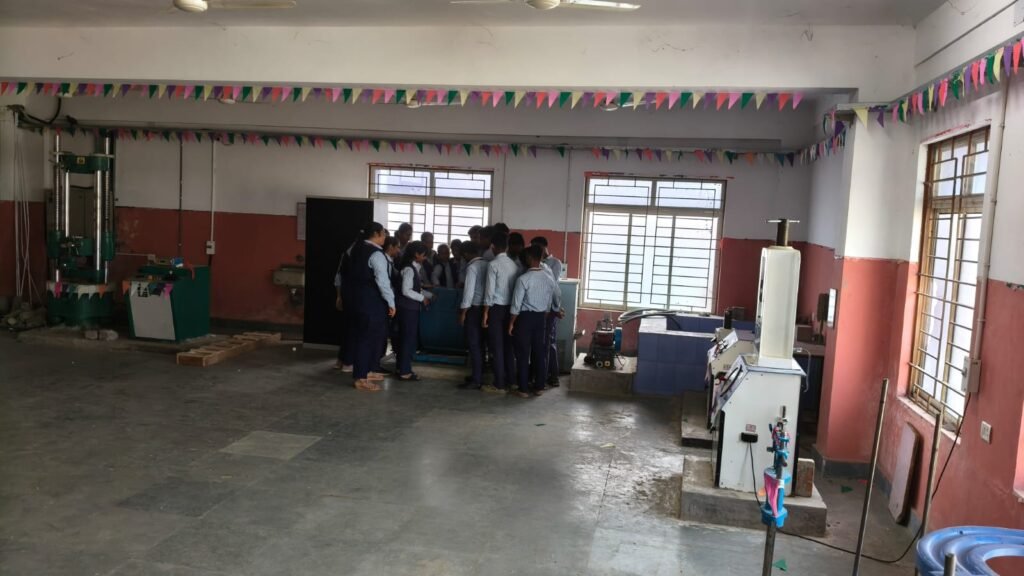
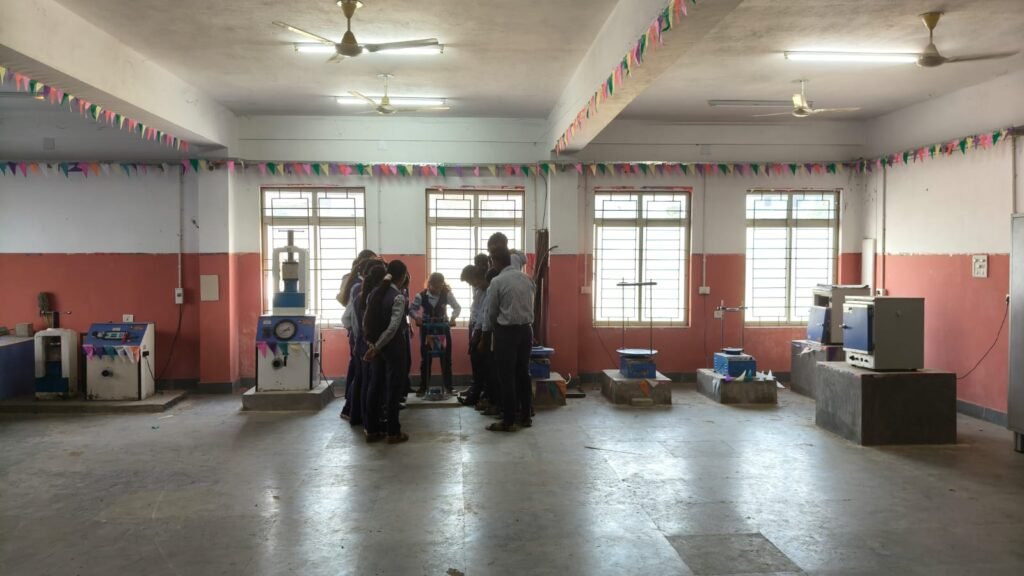
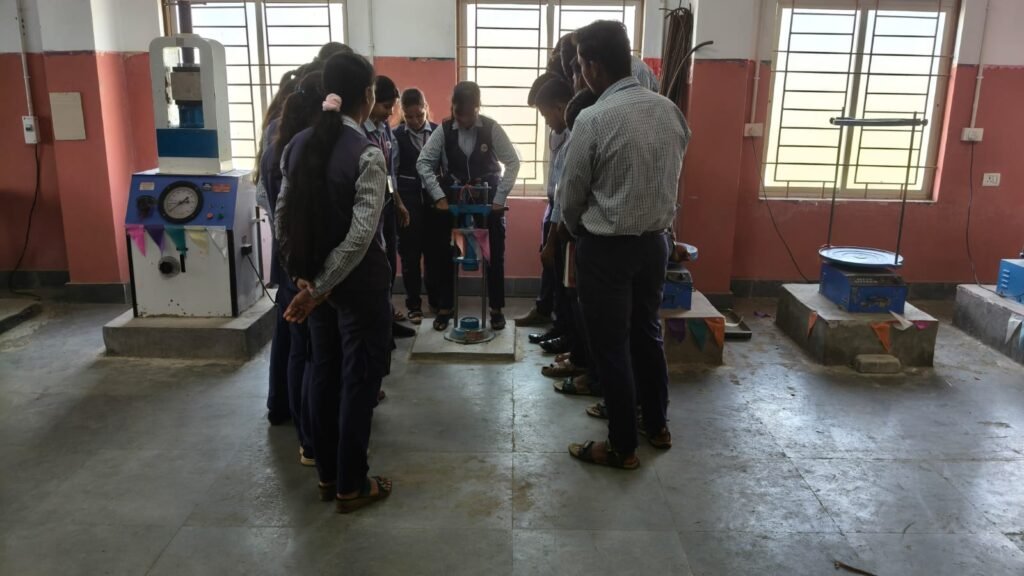
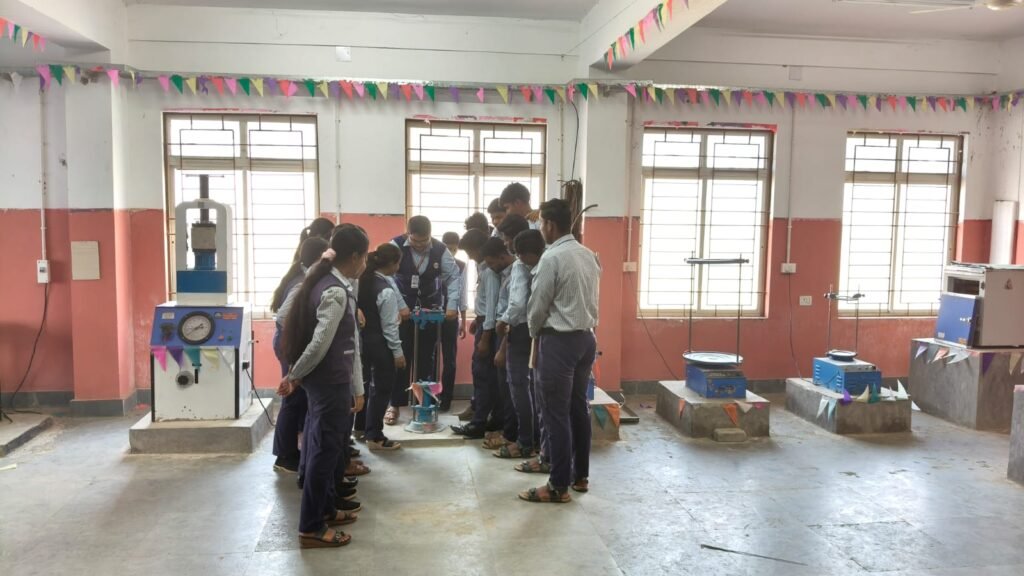
2. MECHANICS OF MATERIALS LAB
In this laboratory, students conduct study and understand the use of Universal Testing Machine (UTM), perform tensile test on different types of steel, compression test on concrete cube use Compression Testing Machine (CTM), Impact test on steel,brass, alluminium, copper and cast iron, water absorption on brick and Flexural test on concrete beam.
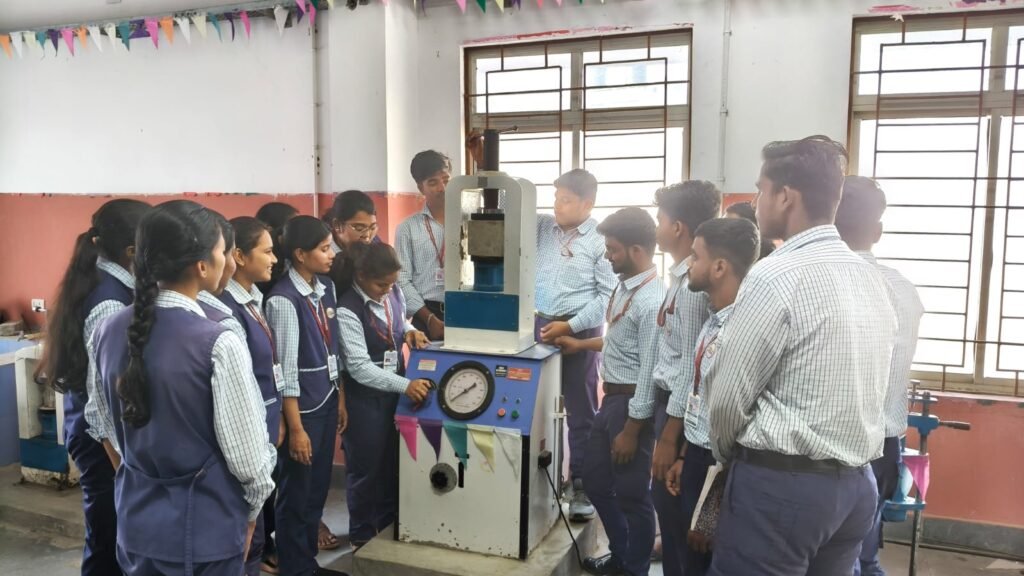
3. GEOTECHNICAL ENGINEERING LAB
In this laboratory, students conduct various tests on construction materials such as soil and aggregate. The experiments include the water content, specific gravity, dry unit weight by core cutter method, plastic, liquid limit, shrinkage limit, grain size distribution of soil by sieve analysis, etc.
4. BUILDING MATERIALS & CONCRETE TECHNOLOGY LAB
In this lab students perform various tests on construction materials such as brick, aggregate, cement and concrete, like identify verious sizes of aggregate use by different types of sieve, fineness, specific gravity, consistency test, initial and final setting time, compressive strength of cement, bulking of send, workability of concrete by slump cone test, compacting factor test, etc.
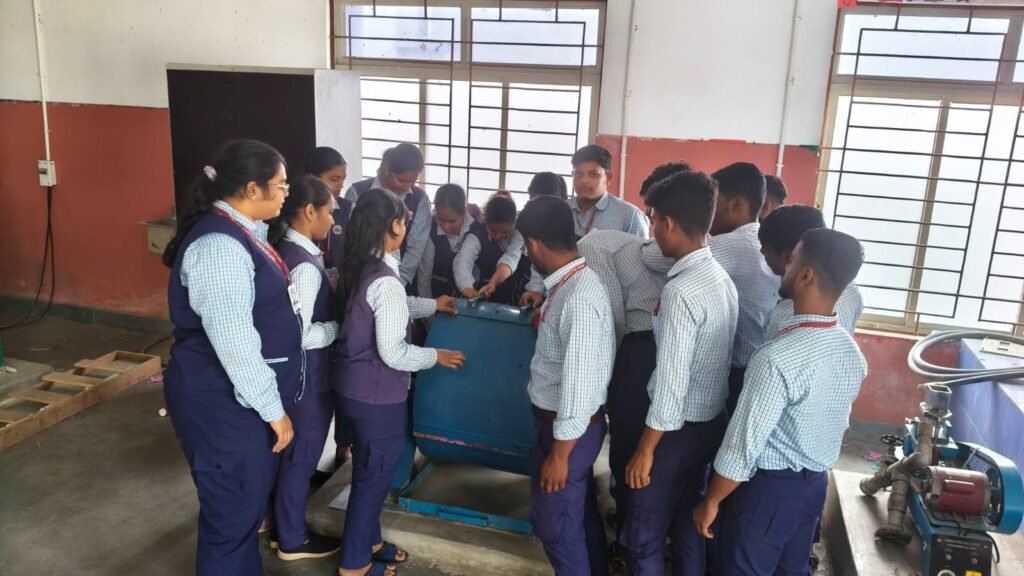
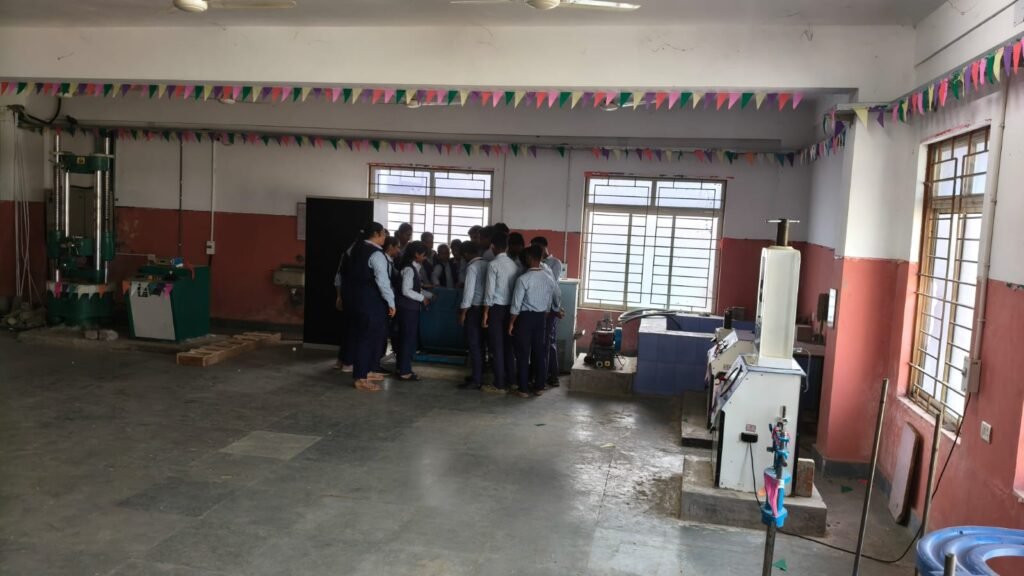
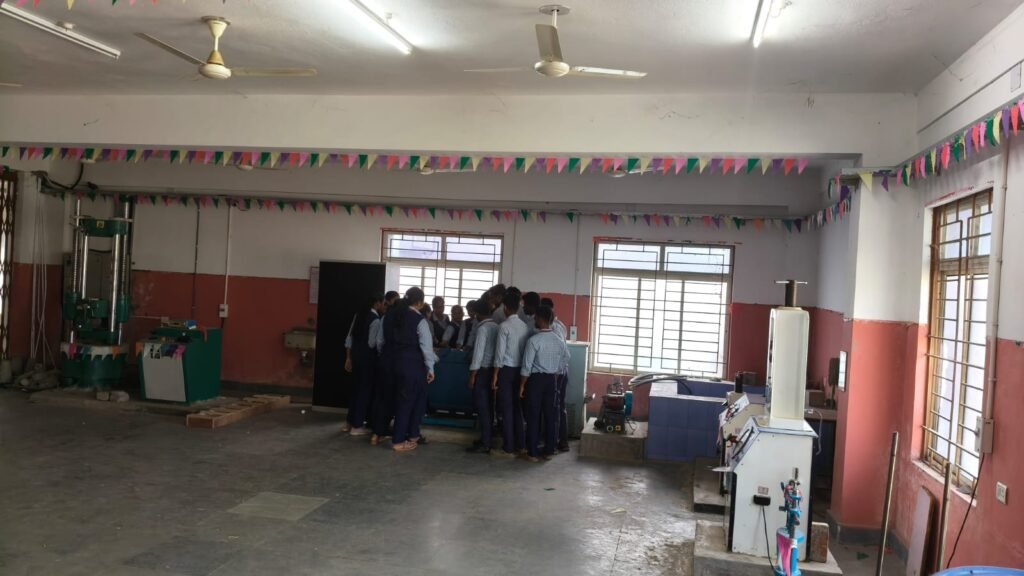
5. HYDRAULICS & IRRIGATION ENGG LAB
In this lab students perform various tests on use piezometer, U-tube manometer to measure pressure, Venturi meter to find discharge, triangular/rectangular notch to measure discharge through open channel, etc
6. ESTIMATING AND COSTING LAB
In this laboratory, students prepare the list of items to be executed with units for detailed estimate of different structures, report on market rate for material, labour wages, tools & equipment’s to construct the given structure by use of computer software in MS Excel for detailed estimate preparation of civil Engineering works.
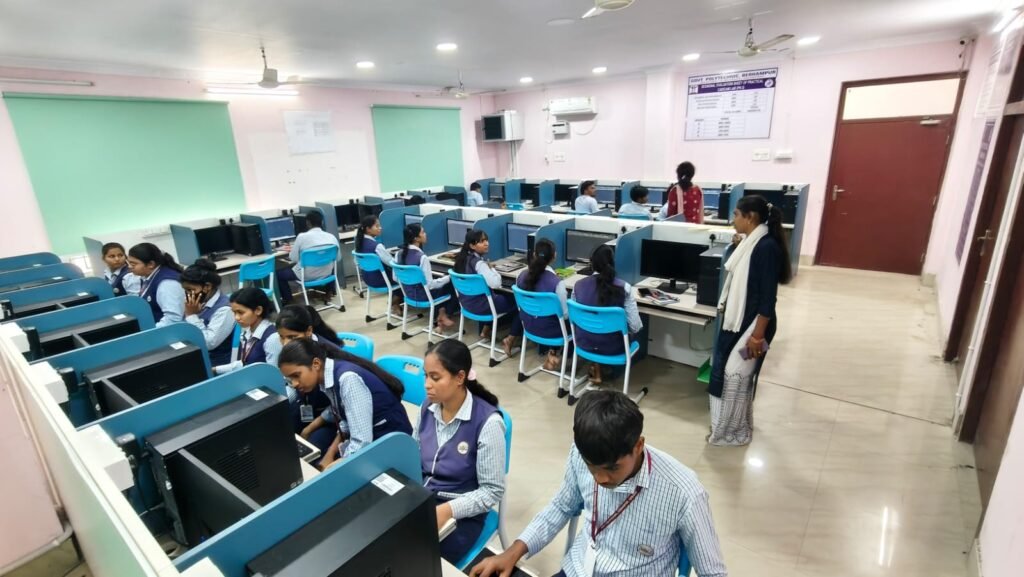
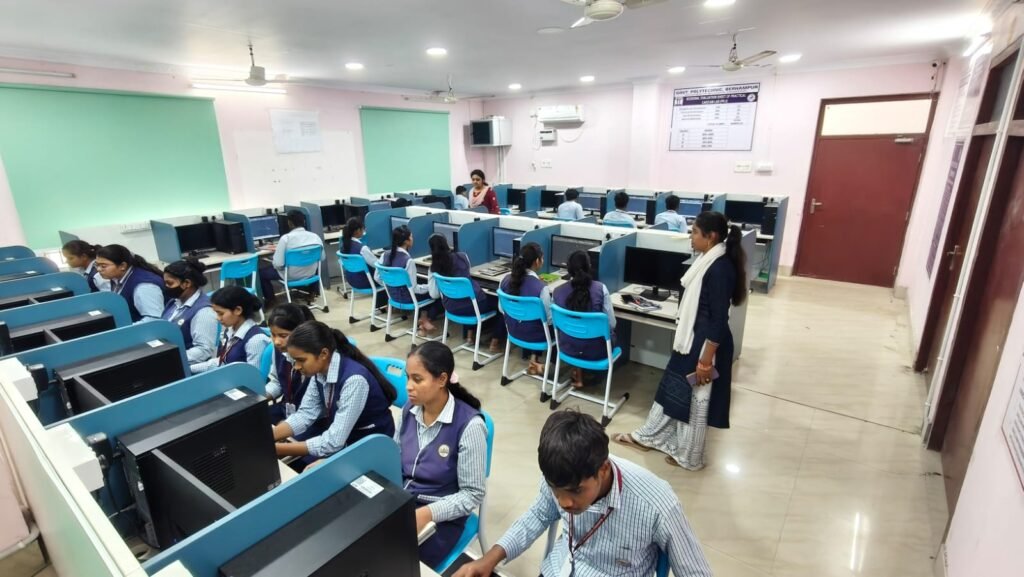
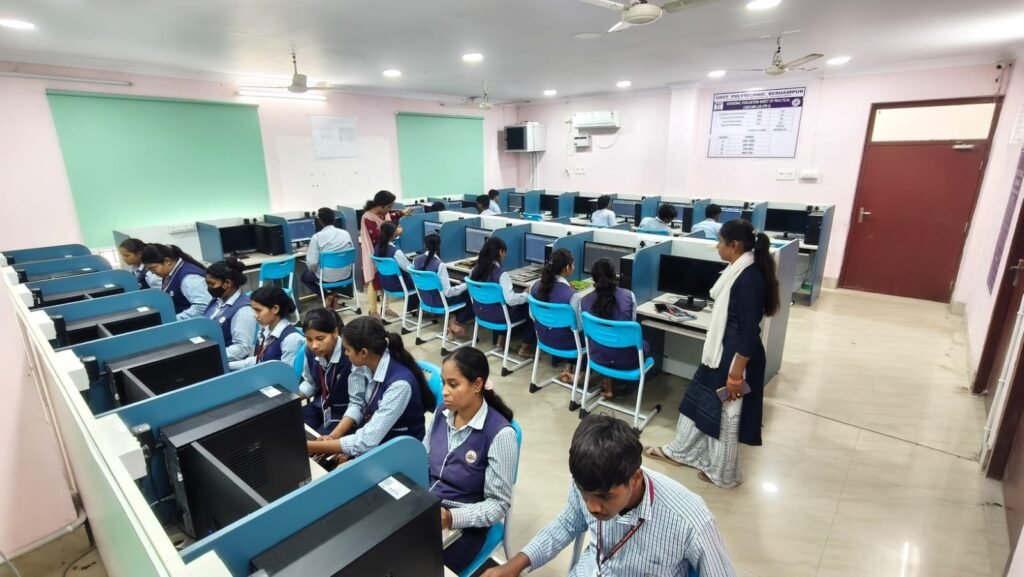
7. BUILDING PLANNING & DRAWING LAB
In this lab deals with different plan, layout of building and drawing of different parts of building, sectional view’s, line plans using by CAD software in computer.
The Computer-Aided Design (CAD) process involves creating detailed computer models defined by precise geometrical parameters. These models allow for accurate visualization, analysis, and modification of designs.
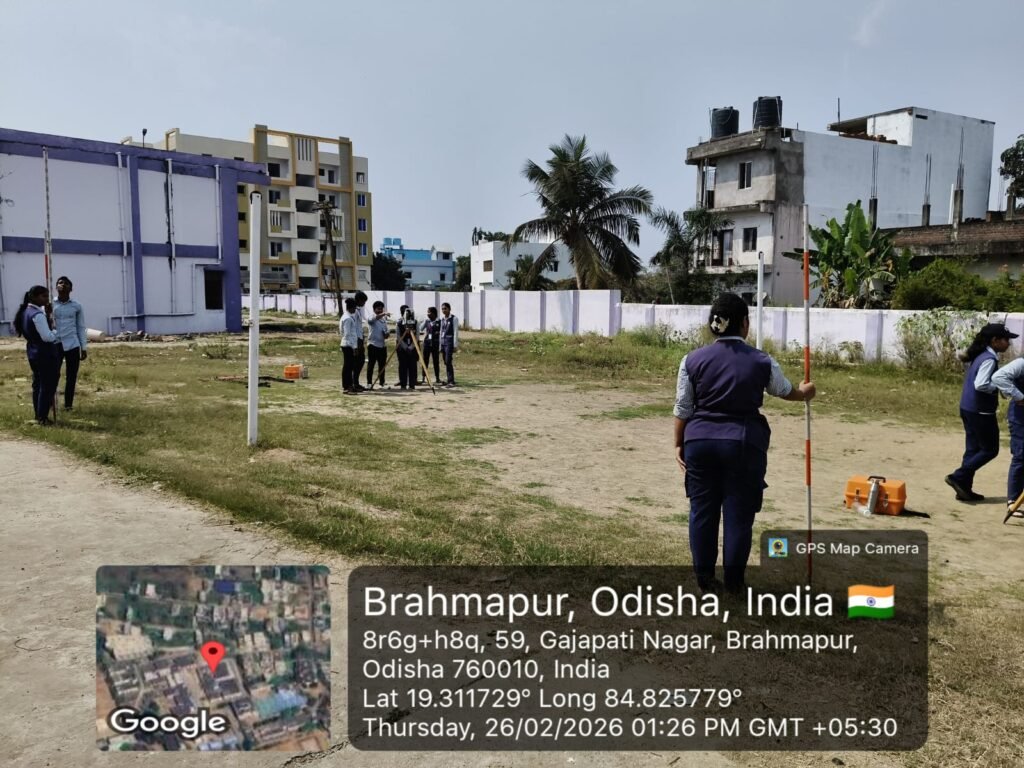
8. SURVEYING LAB
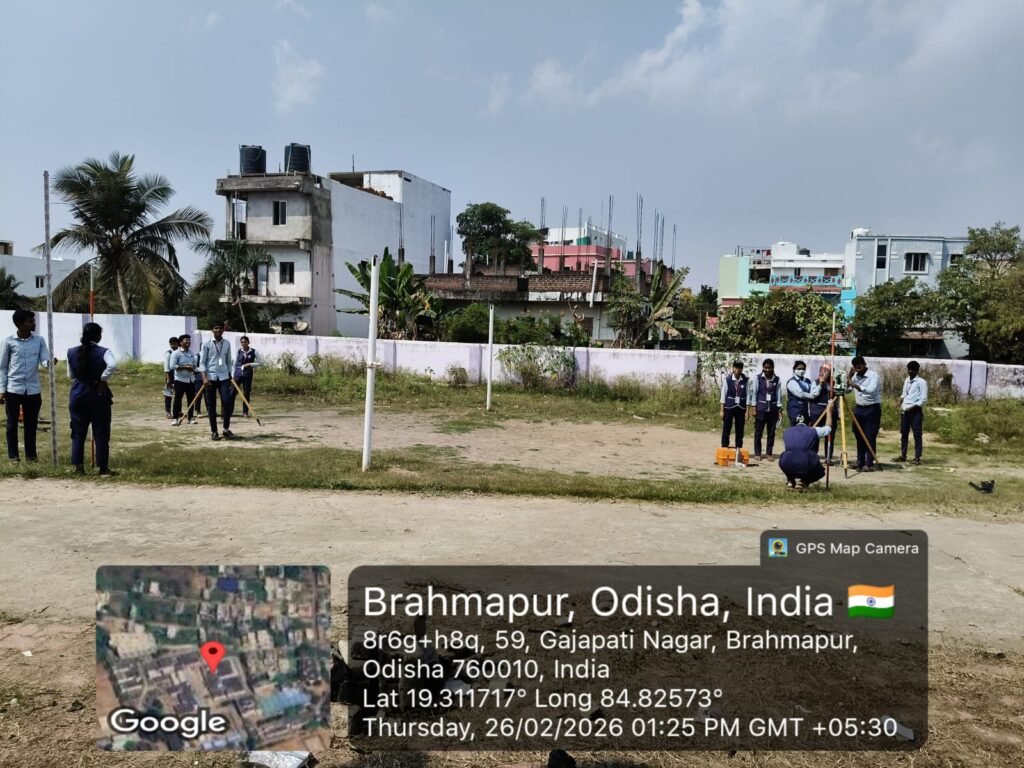
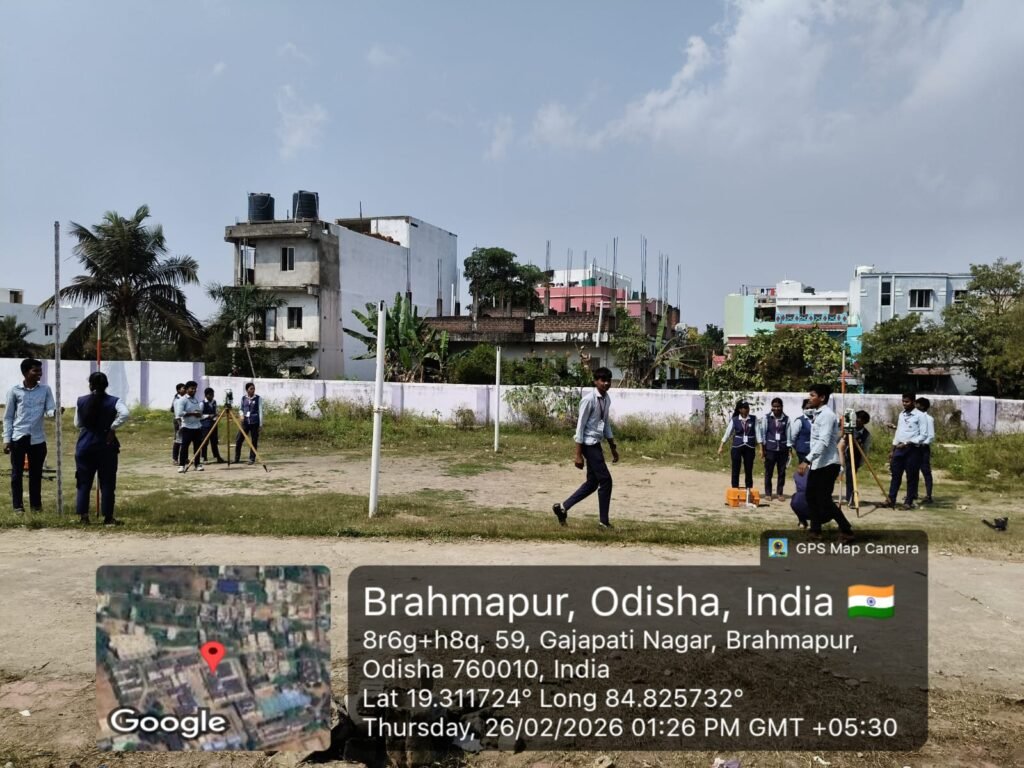
In this lab students perform various survey related actives such as chaining, leveling, compass surveying, plane table surveying, theodolite, etc. for precise measurements of horizontal and vertical distance to prepare a map by using a suitable scale.
9. DESIGN OF RCC STRUCTURES LAB
In this lab students perform design and detailing on various types of RCC structure like beam, column, slab, etc. by use of computer software STAD PRO.
STAAD.Pro V8i is a comprehensive structural analysis and design software from Bentley Systems used by civil/structural engineers to model, analyze, and optimize diverse structures—including buildings, bridges, and industrial plants—under various loading conditions.
10. PUBLIC HEALTH ENGINEERING LAB
This laboratory focuses on experiments related to public health and water quality analysis. Students measure parameters such as water turbidity using a nephelometer, pH levels, and chloride content, among other tests essential for ensuring water safety.
11. PROJECT DISPLAY